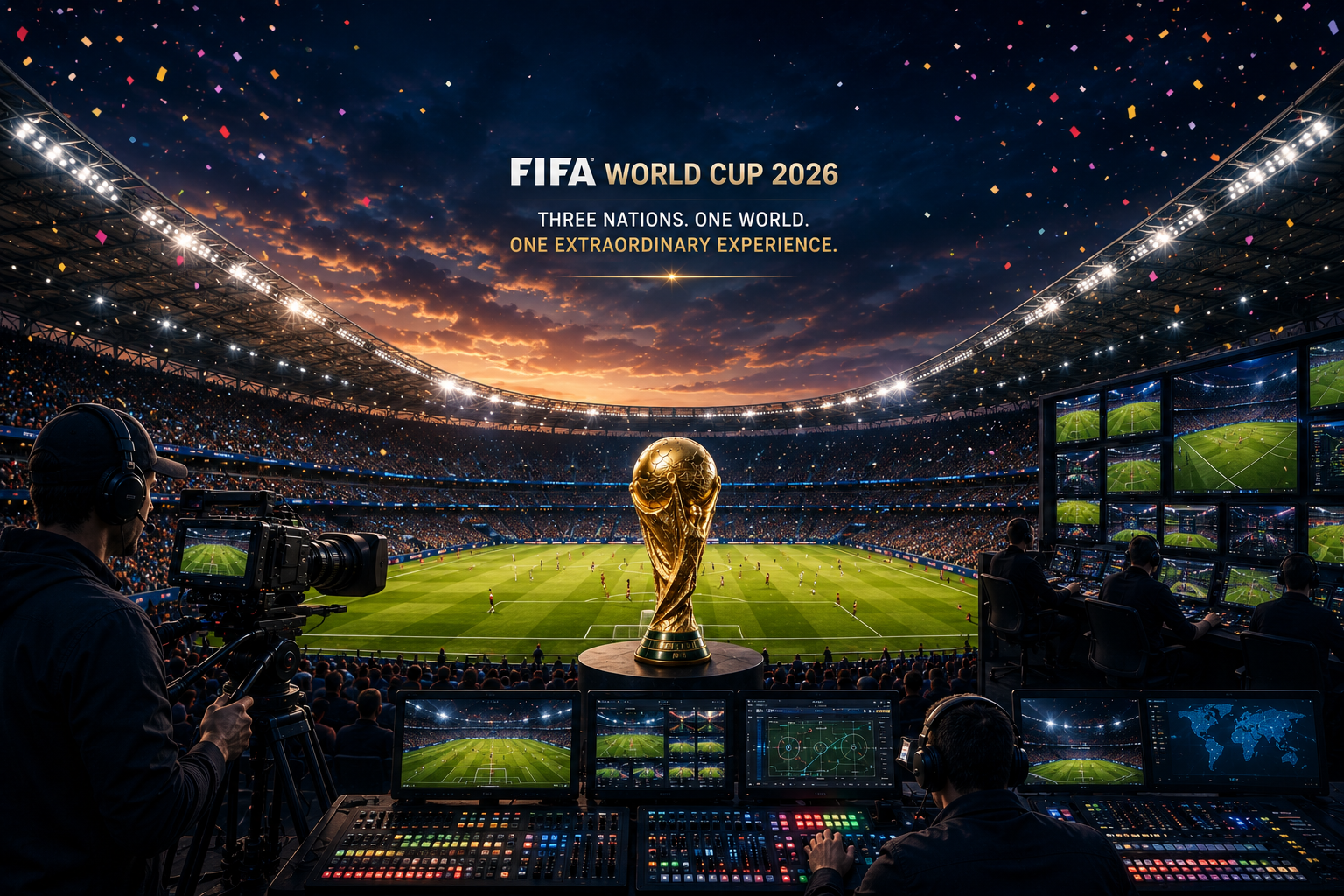
The FIFA World Cup is more than just football—it’s one of the most technologically sophisticated live broadcast productions on the planet. Millions of fans around the world experience every goal, celebration, replay, and emotional moment through an incredibly complex ecosystem of creative professionals, cutting-edge software, advanced camera systems, and broadcast technology.
As the FIFA World Cup 2026 unfolds across the United States, Canada, and Mexico, the scale of production reaches unprecedented levels. But what exactly makes the broadcast experience so smooth, immersive, and visually breathtaking?
Let’s step behind the scenes.
The Team Behind the Broadcast Magic
Broadcasting the FIFA World Cup requires thousands of specialists working together seamlessly.
Host Broadcast Services (HBS)
At the heart of World Cup broadcasting is Host Broadcast Services (HBS), FIFA’s official host broadcaster.
HBS is responsible for:
- Producing the international broadcast feed
- Managing camera operations
- Coordinating technical infrastructure
- Delivering live signals globally
- Overseeing replay operations
- Implementing emerging broadcast technologies
HBS works alongside FIFA and regional broadcasters to ensure every viewer receives the highest-quality coverage.
Major Broadcast Partners Around the World
Several leading broadcasters distribute World Cup coverage internationally:
FOX Sports (United States)
Responsibilities include:
- Studio programming
- Commentary and analysis
- Enhanced graphics packages
- Localized production elements
BBC and ITV (United Kingdom)
Known for:
- Extensive pre-match coverage
- Expert analysis teams
- Immersive storytelling
TSN and CTV (Canada)
Deliver:
- Multi-platform coverage
- Digital streaming integration
TelevisaUnivision (Mexico)
Provides:
- Spanish-language broadcasts
- Dedicated analysis programming
These broadcasters customize the global feed while leveraging the core production created by HBS.
Software Powering FIFA World Cup Broadcasts
Modern sports broadcasting depends heavily on specialized software solutions.
Vizrt – Real-Time Broadcast Graphics
Applications:
- Score bugs
- Lower thirds
- Virtual graphics
- Augmented reality elements
- Statistical overlays
Vizrt’s real-time rendering technology allows broadcasters to present information instantly during matches.
Unreal Engine – Virtual Production and AR Graphics
Increasingly used for:
- Virtual studio environments
- Extended reality (XR) sets
- Augmented reality player analysis
- Interactive visual storytelling
Unreal Engine delivers photorealistic real-time graphics that elevate sports presentation.
EVS XT-VIA Systems
Industry-standard systems for:
- Instant replay generation
- Slow-motion playback
- Highlight package creation
- Multi-angle review
EVS operators work continuously throughout each match.
ChyronHego Graphics Systems
Used for:
- Broadcast graphics
- Statistical visualizations
- Telestration tools
- Data-driven storytelling
Adobe Creative Cloud
Creative teams utilize:
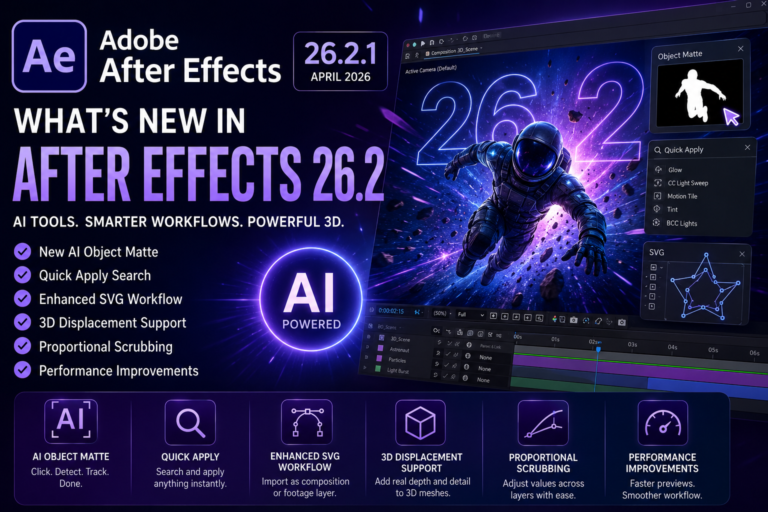
Adobe After Effects
- Motion graphics creation
- Broadcast package animations
- Opening sequences
Adobe Photoshop
- Graphic asset preparation
- Social media visuals
- Broadcast design elements
Adobe Premiere Pro
- Feature editing
- Highlight production
- Promotional content
Avid Media Composer
Often used for:
- Long-form editing
- Documentary segments
- Match recap packages
Data and Analytics Partners
Modern football broadcasting relies heavily on live data integration.
Stats Perform
Provides:
- Real-time player statistics
- Match analytics
- Performance metrics
Hawk-Eye Innovations
Supports:
- Goal-line technology
- Semi-automated offside systems
- VAR operations
- Multi-camera tracking
These systems combine computer vision and AI to improve decision-making accuracy.
Cameras Used During FIFA World Cup Broadcasts
The smoothness and cinematic feel of World Cup coverage come from an extraordinary camera setup.
A single World Cup match may use 40–50 cameras, sometimes even more for critical fixtures.
Main Match Cameras
Sony HDC Series Cameras
Common models:
- Sony HDC-5500
- Sony HDC-3500
Features:
- Native 4K capture
- HDR compatibility
- High frame rate recording
- Exceptional image quality
These serve as the primary game coverage cameras.
Super Slow Motion Cameras
Used to capture:
- Goals
- Fouls
- Celebrations
- Tactical movements
Typical systems include:
Sony HDC-P50A
Features:
- Ultra slow-motion capture
- High frame rates
- Crystal-clear replay quality
Cine-Style Cameras
Used for storytelling shots.
Examples include:
Sony VENICE
Sony FX Series Cameras
Applications:
- Player tunnel shots
- Crowd reactions
- Arrival sequences
- Cinematic opening montages
These cameras create the dramatic atmosphere viewers love.
Spidercam Systems
Perhaps one of the most fascinating technologies.
Spidercam provides:
- Aerial movement above the field
- Dynamic tracking shots
- Immersive stadium perspectives
It moves smoothly across cables suspended above the pitch.
Steadicam Systems
Operators use Steadicams for:
- Player entrances
- Touchline coverage
- Trophy presentations
These shots add emotional depth to broadcasts.
Drone Technology
In permitted areas, drones capture:
- Stadium exteriors
- Host city landscapes
- Opening sequences
They help establish the scale and grandeur of the tournament.
Virtual and Augmented Reality Graphics
Modern FIFA broadcasts increasingly use:
Augmented Reality Graphics
Examples include:
- Tactical formations on the pitch
- Player comparison graphics
- Distance visualizations
- Interactive analysis tools
Extended Reality Studios
Virtual studios powered by:
- Unreal Engine
- Viz Engine
- Camera tracking systems
These technologies create visually stunning analysis segments.
The Role of AI in FIFA World Cup Broadcasting
Artificial Intelligence is becoming increasingly important.
AI assists with:
- Automated highlight generation
- Metadata tagging
- Player tracking
- Camera selection suggestions
- Personalized viewing experiences
AI enhances production efficiency while allowing creative teams to focus on storytelling.
Why FIFA Broadcasts Feel So Smooth
The seamless experience viewers enjoy results from the coordination of:
- Thousands of production professionals
- Advanced replay systems
- Real-time graphics engines
- Specialized camera operators
- Data analysts
- Broadcast engineers
- Software developers
- Creative design teams
Months of preparation go into every match.
The goal is simple:
To make fans feel like they are inside the stadium, experiencing every moment live.
The Future of Sports Broadcasting
The FIFA World Cup 2026 represents the future of live sports production.
Emerging technologies include:
- 8K broadcasting
- AI-driven production assistance
- Volumetric video capture
- Enhanced virtual reality experiences
- Personalized streaming feeds
- Advanced augmented reality graphics
The line between traditional broadcasting and immersive experiences continues to blur.