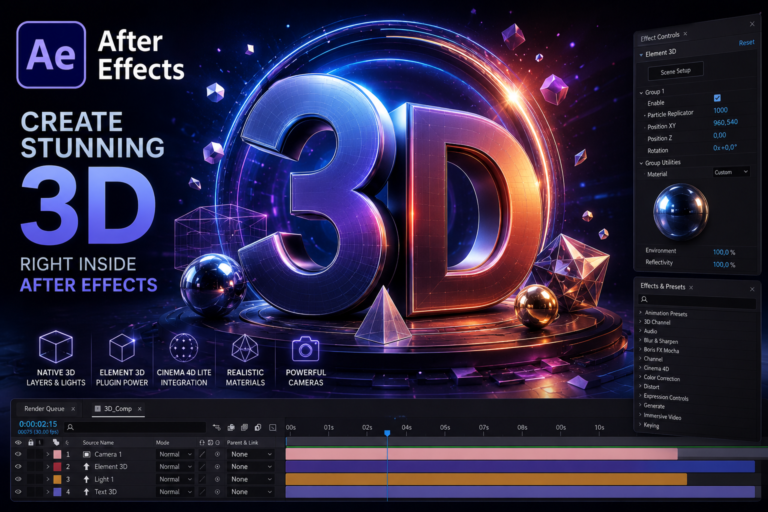
Creating stunning visuals is no longer limited to major film studios. Today, artists, designers, and creative studios can produce cinematic-quality content by combining 3D modeling with the powerful compositing capabilities of Adobe After Effects.
The secret behind many eye-catching commercials, product visualizations, motion graphics projects, and digital experiences lies in the seamless integration of 3D elements into polished final compositions.
Why Compositing Matters More Than Ever
A beautifully crafted 3D model is only one part of the creative process. What truly elevates a project is how those elements interact with lighting, visual effects, typography, backgrounds, and real-world footage.
Compositing transforms separate components into a cohesive visual story.
It helps artists:
✓ Blend 3D objects naturally into scenes
✓ Create realistic atmospheres and depth
✓ Enhance visual storytelling
✓ Add cinematic effects and polish
✓ Improve audience engagement
Without effective compositing, even highly detailed 3D assets can feel disconnected from the final piece.
The Modern 3D to After Effects Pipeline
Today’s workflows prioritize efficiency without sacrificing creativity.
Stage 1: Building the 3D Foundation
Everything begins with strong modeling practices.
Common 3D assets include:
- Product visualizations
- Characters and creatures
- Environmental elements
- Motion graphics assets
- Architectural models
- Abstract design components
Well-optimized models ensure smoother animation and faster rendering.
Stage 2: Lighting and Rendering Passes
Professional artists rarely render a scene as a single image.
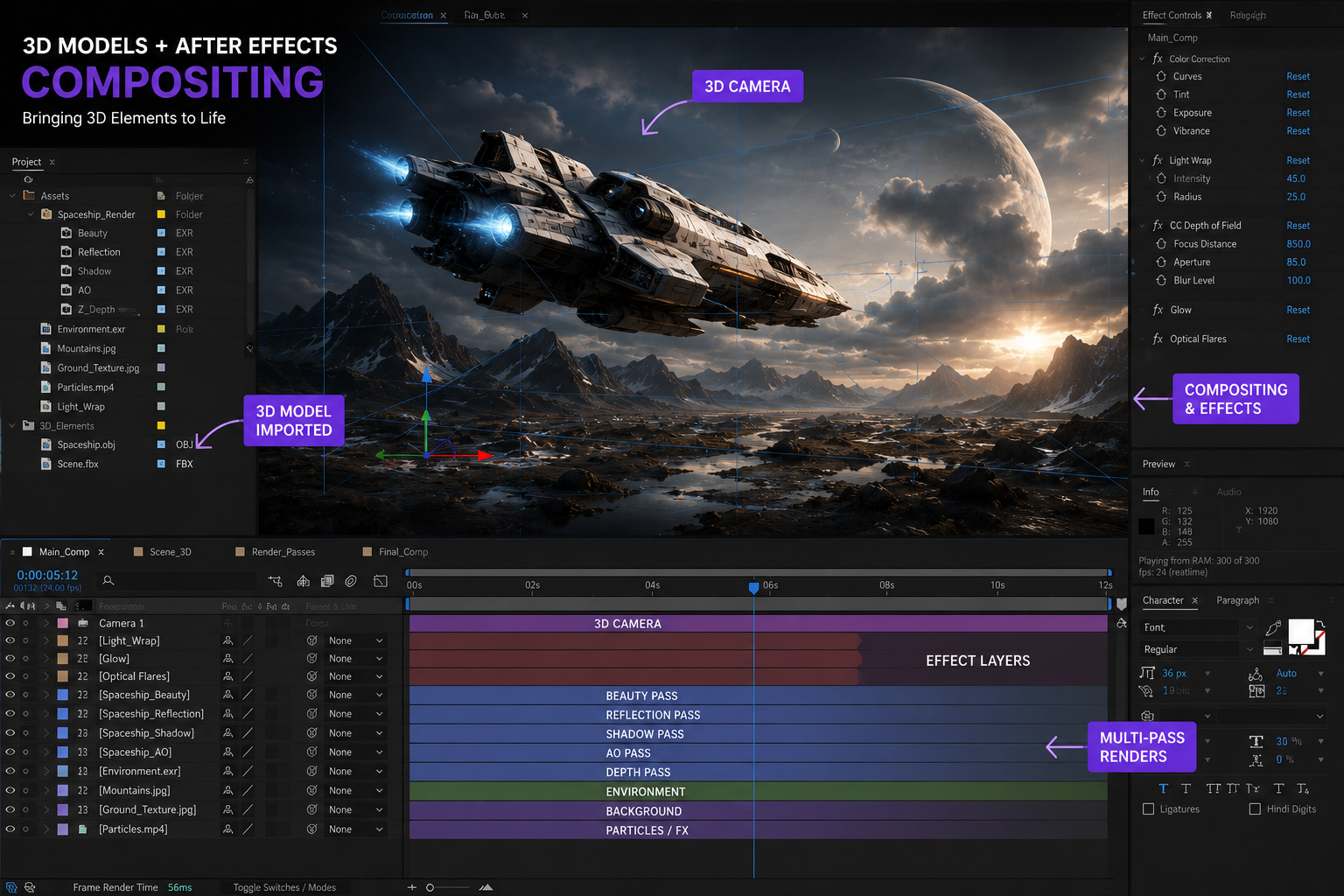
Instead, they generate multiple render passes such as:
- Diffuse Pass
- Reflection Pass
- Ambient Occlusion
- Shadow Pass
- Z-Depth Pass
- Specular Highlights
These layers provide maximum flexibility during compositing.
Stage 3: Bringing Everything into After Effects
This is where the magic happens.
After Effects enables designers to:
- Composite multiple render passes
- Integrate live-action footage
- Add motion graphics elements
- Apply camera effects
- Enhance color grading
- Introduce atmospheric effects
The result feels polished, immersive, and cinematic.
Creative Techniques That Instantly Improve Composites
Depth of Field
Subtle focus variations create realism and guide viewer attention.
Color Matching
Ensuring consistency between 3D elements and backgrounds helps maintain visual harmony.
Light Wrap Effects
Soft lighting around edges integrates 3D objects naturally into scenes.
Motion Blur
Adding motion blur significantly improves perceived realism during movement.
Particle Enhancements
Dust, smoke, sparks, and environmental particles bring scenes to life.
Real-World Applications
The combination of 3D modeling and compositing is transforming creative industries.
Product Advertising
Showcase products from impossible camera angles with complete creative control.
Broadcast Graphics
Television and streaming platforms rely heavily on dynamic 3D compositions.
Motion Graphics Campaigns
Brands use visually striking animations to increase audience retention.
Architectural Visualization
Clients can experience environments long before construction begins.
Social Media Content
Short-form videos become more engaging with cinematic 3D enhancements.
Common Mistakes to Avoid
Many beginners focus exclusively on modeling quality while overlooking compositing.
Avoid these pitfalls:
❌ Overusing visual effects
❌ Ignoring realistic lighting
❌ Excessive sharpening
❌ Inconsistent shadows
❌ Poor color balance
❌ Rendering without compositing flexibility
The strongest projects prioritize storytelling over technical complexity.
The Future: Faster Workflows, Bigger Possibilities
Emerging technologies such as AI-assisted tools, real-time rendering engines, and improved compositing techniques continue to reshape digital production.
Artists who master both 3D creation and After Effects compositing gain a significant advantage by delivering complete visual solutions rather than isolated assets.
The future belongs to creators who understand how every stage of production contributes to a compelling final experience.
Great visual content isn’t simply about creating impressive 3D models. It’s about transforming those models into immersive experiences through thoughtful compositing and creative direction.
By combining strong 3D foundations with the versatility of After Effects, designers can produce cinematic visuals that capture attention, communicate ideas effectively, and leave a lasting impression.
At CreateMotion, we continue exploring innovative workflows, sharing educational resources, and delivering professional animation and compositing services that help brands tell extraordinary stories through motion.