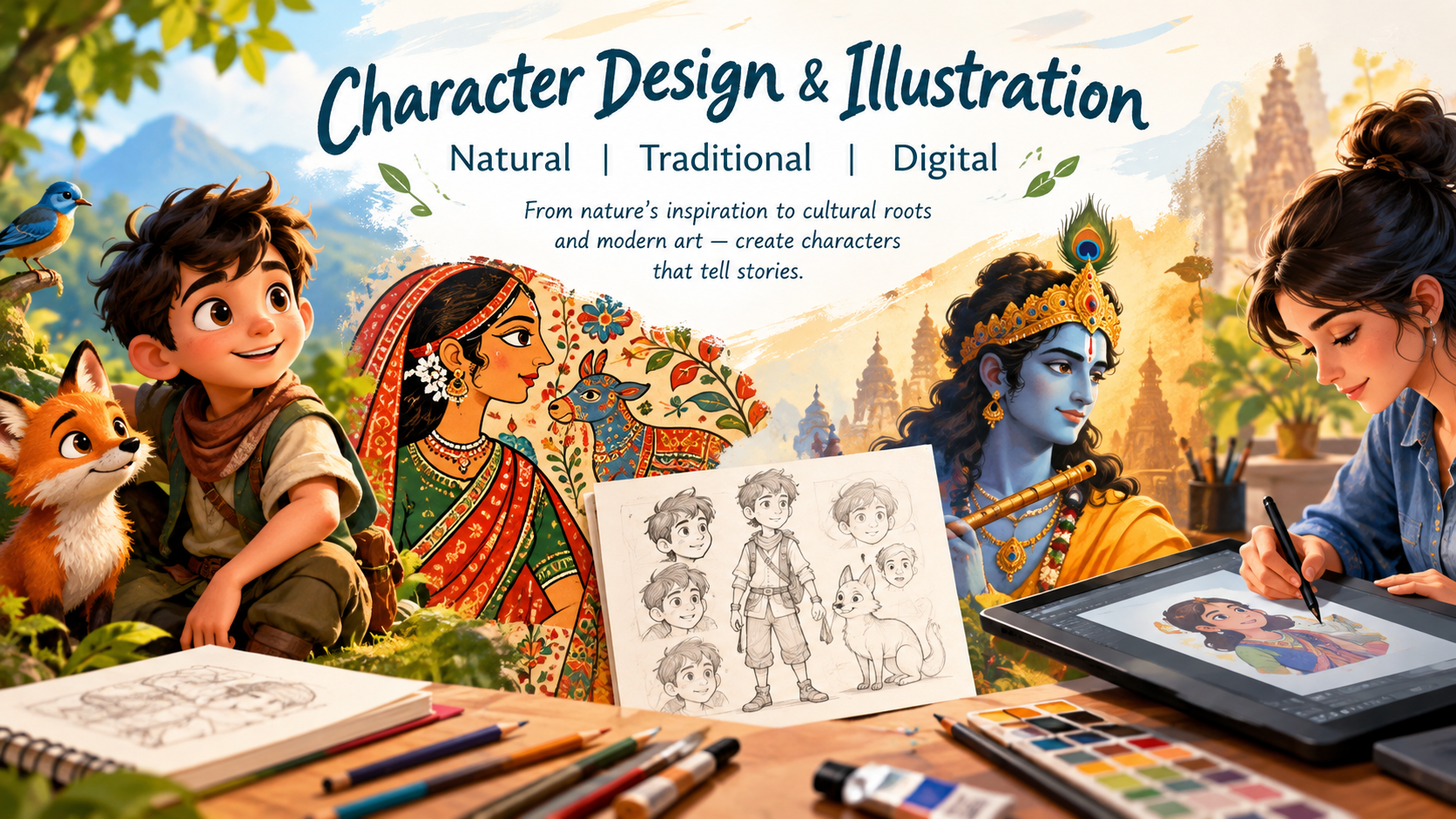
Traditional Indian character design brings together storytelling, cultural heritage, regional clothing, symbolic details, expressive forms, and distinctive artistic styles. From mythological figures and village storytellers to folk heroes and animals, Indian visual traditions offer a rich foundation for creating memorable characters.
These characters can be adapted for modern illustration, animation, children’s stories, educational content, comics, and digital media while respecting the artistic traditions that inspire them.
Exploring India’s Traditional Art Forms
India has many regional art traditions, each with its own visual language and storytelling methods.
Madhubani painting
Associated with Bihar, Madhubani art is known for decorative patterns, strong outlines, and detailed compositions. Its motifs can inspire stylized characters, ornamental clothing, and patterned backgrounds.
Warli painting
Warli art, associated with Maharashtra’s Adivasi communities, uses simplified geometric forms to represent people, animals, community life, and nature. Its visual simplicity offers useful inspiration for graphic characters and movement-based storytelling.
Bengal Patachitra
Bengal Patachitra is a traditional storytelling art involving painted scrolls and narrative imagery. Its bold outlines, vivid colors, and carefully arranged scenes can inspire illustrated folktales and story-driven character designs.
Gond painting
Gond painting is recognized for detailed patterns, lines, and dots used to depict animals, plants, and stories connected with nature and cultural beliefs. These techniques can inspire richly patterned fantasy creatures and decorative character illustrations.
Designing a Traditional Character
1. Understand the character’s background
Before drawing a traditional character, research its cultural setting, historical period, regional identity, and role in the story. A village musician, a mythological hero, and a folk storyteller should not automatically share the same clothing, ornaments, or visual symbols.
2. Study clothing and accessories
Clothing helps communicate a character’s environment, occupation, social role, and historical context. Draped garments, turbans, jewellery, traditional footwear, and handcrafted objects can contribute to a convincing design when selected appropriately.
3. Use meaningful colors and patterns
Traditional art styles often employ distinctive combinations of color, line, and ornament. Study the specific tradition rather than assuming that one color palette represents all Indian cultures.
4. Balance tradition with modern illustration
Traditional references can be adapted into simplified 2D characters, stylized 3D models, vector illustrations, or detailed digital paintings. The goal is to make the character suitable for its intended medium without losing the qualities that make the reference meaningful.
5. Maintain cultural authenticity
Avoid mixing unrelated regional traditions simply because their patterns or costumes look attractive together. When possible, consult reliable cultural resources, museum collections, knowledgeable practitioners, and artists from the relevant communities.
Traditional Characters in Modern Animation
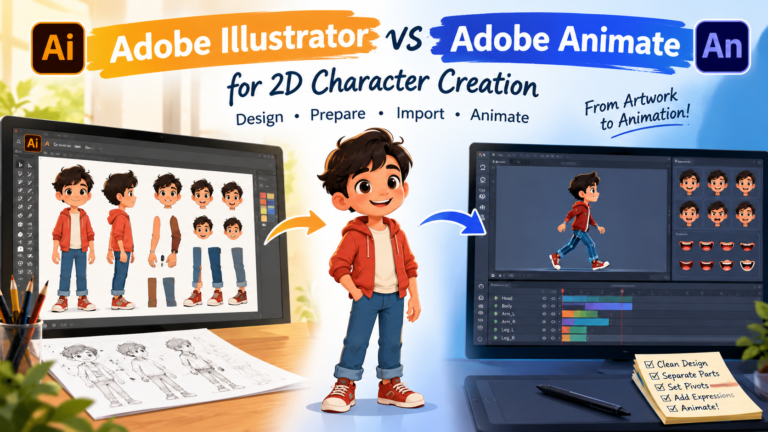
Traditional character design can work particularly well in animated folktales, mythology-inspired stories, educational videos, and children’s content. A consistent model sheet showing the character’s proportions, expressions, costumes, colors, and poses helps preserve visual continuity between scenes.
Artists should also consider the final production method. A detailed folk-art design may look beautiful in a still illustration, while a simplified version may be easier to animate or reproduce at small screen sizes.
Conclusion
Traditional Indian character design provides artists with a meaningful way to connect cultural storytelling with contemporary visual media. By studying regional art forms, researching character backgrounds, and adapting visual elements thoughtfully, artists can create illustrations that are expressive, original, and culturally informed.
References and Further Reading
Adobe — Illustration and career guidance: https://www.adobe.com/in/creativecloud/roc/blog/design/how-to-become-an-illustrator.html